Showing posts with label 环境保护 Down to Earth. Show all posts

11 October 2008

Nature Trail at Southern Ridges

Went to the Southern Ridges in August.... selected a few pics to share...


Alexandra Arch....


Hort Park with a wide collection of plants...


An unique flower tat resembles butterfly...


This pic feels like winter in S'pore......


My dad with buddy Uncle Simon on the Henderson Wave... Heard tat the night view of the Wave is even better......must visit one day...

16 May 2008

Earth Off Balance & it's OUR fault!


Fri, May 16, 2008 The Straits Times

Earth off balance and it's our fault
WASHINGTON - HUMAN-GENERATED climate change is altering plant and animal life on every continent, a vast global study has found, with flowers blooming and birds breeding earlier, and polar bears becoming cannibals.

Hundreds of previous studies have noted these specific changes, and most suggested a link to human-caused, or anthropogenic, global warming.
But the new study, published in the journal Nature, goes further, trawling hundreds of papers published in peer-reviewed journals dating back to the 1970s, and correlating them with temperature changes.
The researchers uncovered a close relationship between temperature shifts between 1970 and 2004 and changes in plants and animals as well as physical changes like the retreat of glaciers and the water level in desert lakes.
'When you look at all of the glaciers and all of the snowpack and all of the birds laying eggs earlier and all of the plants having spring earlier across a continent, then we see we can detect anthropogenic signals,' said the study's lead author, Dr Cynthia Rosenzweig of Nasa's Goddard Institute for Space Studies.
'Humans are influencing climate through increasing greenhouse gas emissions,' she added.
'The warming world is causing impacts on physical and biological systems attributable at the global scale.'
The scientists also worked to rule out observed changes that could have been caused by factors other than human-related climate change.
Building on research done to support findings reported last year by the United Nations' Intergovernmental Panel on Climate Change (IPCC), Dr Rosenzweig and her co-authors brought together nearly 30,000 sets of data about biological and physical changes around the world.
They then matched those up with a detailed database of global temperature change and 'observed changes consistent with warming', said Dr Rosenzweig.
Critics of the earlier IPCC report had argued that the perceptible warming which has occurred over the last three decades is the result of natural causes, such as volcanic eruptions or changes in solar radiation.
But the new paper rejects such theories, saying that the changes in the Earth's natural systems cannot be explained by such factors.
Dr Rosenzweig said the link between human-caused global warming and observed biological and physical changes was just too strong.
On a global scale, the correlation is more than 99 per cent between the two factors, she said, while on a continental scale it is probably between 90 and 99 per cent.
REUTERS, AGENCE FRANCE-PRESSE

Let's unite and do something now --> http://evephua.blogspot.com/2008/04/lets-do-something-now.html

03 April 2008

Let's Do Something NOW

Combat Global Warming Map

How many ticks do you have?
A little action like turning off the switch, bringing your own stainless steel chopsticks, recycling paper, eating less meat, etc can make a big difference....

Let's heal the diseased earth together!

22 March 2008

Love Us, Not Eat Us!

Email ty@loveusnoteatus.com or call T Y Lee at 96700337 to have the above car decal mailed to you. Visit http://www.loveusnoteatus.com/ for details.

I know it's impossible to become a vegan or vegetarian overnight, start by reducing the consumption of meat, esp red meat. I'm a semi-veg now, or to be precise, I only take fish (Pesco-Vegetarian). My main reason is first of all, health, secondly, to save the earth's resources of rearing animals (eg, it takes 10kg of grain to produce merely 1kg of beef), and thirdly, compassion and humaritarian. It just happens naturally, not because of religion.

Here are some common questions about vegetarianism. Hope it can help to clear your doubts.

1. What are the different types of vegetarians?
Strict vegetarians, called vegans, eat no animal products at all. The staples of their diets are fruits, vegetables, legumes (beans and peas), grains, seeds, and nuts.
Lacto-vegetarians eat dairy products in addition to plant foods.
Lacto-ovo vegetarians include dairy products and eggs as well as plant foods in their diets.
People who eat animal flesh (meat, fish, chicken) are not considered to be vegetarians. However, as the health benefits of a vegetarian diet become more widely known, many people reduce or eliminate animal products. For example, they may eat fish and chicken but no red meat, or they may eat meat in small portions only a few times a week. These people can most accurately be described as following a semi-vegetarian diet.

2. What are the health benefits of a vegetarian diet?
Vegetarian diets are lower in saturated fats, cholesterol, and animal protein. They’re also high in folate, anti-oxidant vitamins like C and E, carotenoids, and phytochemicals. Overall, vegetarians have substantially reduced risks for obesity, heart disease, high blood pressure, diabetes mellitus, osteoporosis, and some forms of cancer - particularly lung cancer and colon cancer. Vegetarian diets that are low in saturated fats have been successfully used to reverse severe coronary artery disease.

3. Is it possible to get enough protein on a vegetarian diet?
Absolutely, it’s actually difficult to become protein deficient unless you quit eating all together. Just about all unrefined foods contain significant amounts of protein. Potatoes are 11% protein, oranges 8%, beans 26%, and tofu 34%. In fact, people have been known to grow at astounding rates (doubling their body size in only six months) on a diet of only 5% protein. These people are infants and they do it during the first 6 months of life, fueled by breast milk, which contains just 5% protein.

4. How much protein do I need, anyway?
The Recommended Dietary Allowance (R.D.A.) for protein is 0.8 grams a day per kilogram of bodyweight. (Divide your weight in pounds by 2.2 to get kilograms.) Athletes may require more protein, but the amount is small (1.0 to 1.5 grams per kilogram of bodyweight), an amount easily obtainable from a vegetarian diet.
Excess protein consumption can cause a variety of problems including bone mineral loss, kidney damage, and dehydration. Your body can only use so much protein, the excess is either broken down through oxidization, placing an enormous strain on the kidneys, or it is stored as body fat. Neither option is particularly desirable.

5. What’s the difference between complete and incomplete proteins?
Animal protein contains all nine of the essential amino acids, so it has been referred to as a "complete" protein. The nine essential amino acids can also be found in plant proteins, however no single plant source contains all nine of them. Therefore, plant protein has been referred to as "incomplete."
It was once widely believed that vegetarians had to carefully combine plant protein sources in each meal in order to obtain all nine essential amino acids. However, scientific studies have shown that the human body can store essential amino acids and combine them as necessary. So, while combining beans and rice, or peanut butter and bread produces a complete protein, it’s not necessary to consciously do this at every meal. If you eat a varied diet and adequate calories, combining proteins is not an issue.

6. Why do people become vegetarians?
There are a variety of reasons. Many people switch to a vegetarian diet for weight loss and improved health. Some are concerned about the safety of meat following recent outbreaks of salmonella and e. coli bacteria. Others feel that it is moral or spiritual issue. Some individuals deplore the suffering of animals in modern factory farms. Still others are concerned about the environment and world hunger. A few just don’t like meat. For many vegetarians it is a combination of issues.


20 March 2008

留一片蓝天

20.03.08, 12.30am 在FM97.2 听到这首歌,感触良多。
歌曲18年前发表,以前纯粹把它当作好歌欣赏。
现在再次听这首歌,听出了环保意识与
保护下一代的重要性。
真的要问一问自己,我们留下什么给明天的孩子。


留一片藍天
作詞:宋天豪 作曲:蔡宗政

(柏)星星住在天空 人群住在地球 
宇宙之間我們不寂寞
(松)沙漠擁有綠州 山谷擁有河流 天空也有彩虹

*(柏)他們留下什麼給明天的孩子 陪他一起認識地球
(合)留下高樓大廈 還是公路煙囪 誰能做他的朋友

#留一片藍天 讓白雲彩霞都有一個家 
留一片海洋 讓海鷗飛翔 沒有人會阻擋 
讓地球每個角落都靠近天堂 

留一片草原 讓蝴蝶和花都有一個家 
讓地球的孩子可以找到他 說說心裡的話 
讓世界的每一天都充滿著阳光 
留一片藍天 留一片藍天

Repeat *,#
(柏)星星住在天空 人群住在地球  宇宙之間我們不寂寞
(松)沙漠擁有綠州 山谷擁有河流 天空也有彩虹

18 March 2008

环保酵素

前天谈到鼓励大家在家里制作环保酵素,这里提供制作“秘方”。

环保酵素的用处很多,可以抹地、抹玻璃(防止手印)、洗水槽、除臭、施肥等等。

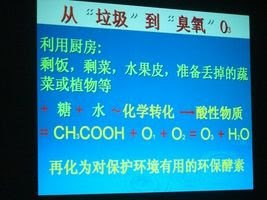
以下是我发酵的‘成品’,左边是外用的环保酵素,右边的是食用的酵素(采用的是raw honey 和新鲜水果)。原来在发酵过程中所产生的气体有助于净化空气、保护臭氧层ozone layer。

原来,我们家里的垃圾桶(尤其是装满了食物残渣)时时刻刻都在释放甲烷(沼气),刺激了温室效应,将空气的温度提升。
[Methane is a relatively potent
greenhouse gas with a high global warming potential (i.e., warming effect compared to carbon dioxide)]

所以,做环保酵素最主要的目的是鼓励每一个人家中都有环保酵素,延缓全球暖化的情况。 保护地球,人人有责!

以下摘自《大家健康》杂志

来自泰国的乐素昆博士(Dr Rosukon)研究酵素30余年,成功研究出环保酵素(也称垃圾酵素,Garbage Enzyme)。

环保酵素就是利用菜渣、果皮等鲜垃圾制成的,不但制作过程简单、制作材料随手可得、节省金钱、用途广泛、减少垃圾量,还对环保起着很大的作用。在马来西亚,我们也发现到两位极力推广环保酵素的环保达人,他们是来自槟城的温秀枝医师 (Dr Joean Oon)及泰国的吗哈老师(Mr। Mahaprajuap),他们两位皆到乐素昆博士的健康之家(Health Farm)学习,并致力于到世界各地推广环保酵素。通过多方打听,本刊以第一时间联络上这两位充满爱心的环保达人,并与他们进行专访,将环保酵素的制作过程及种种好处与读者们分享。

材料:黑糖/黄糖 1kg 、鲜垃圾 3 kg、水 10 litres

备注:搜集到3kg的鲜垃圾,就必须加入1kg的黑糖及10 litres 的水,以此类推。

步骤:

1 将搜集到的鲜垃圾切成小块,以加速分解过程。

2 随后将鲜垃圾倒进瓷器,陶缸或者塑胶缸里。切记选用较大的容器制作酵素,以防止在发酵时溢出容器外。

3 加入适当比例的黑糖及水,稍微搅拌。

4 黑糖水需盖过垃圾,把浮在液面上的垃圾按下去,使其浸泡在液体中。将容器盖紧,必须发酵至少三个月。

注意事项:
1)鲜垃圾包括剩饭、鲜菜叶、水果皮等准备丢掉的蔬菜或植物,不包括废纸、塑胶、金属罐头与瓶子。

2)制作过程中会有气体(臭氧)产生,如果使用窄口的容器(如矿泉水瓶),切记每天将瓶口稍微打开,用来卸放气体(至少每星期卸气一次,否则瓶子将会被撑破)。如果使用宽口的容器,气体会自然被挤出,较无上述问题。

3)制作过程中如果发现苍蝇卵,不必担心也不必理会,发酵过程将会把它们分解掉,这也说明了环保酵素不会对生物带来危害。

4)若发现液体表面产生白色、黑色或棕色的微生物,不必理会,让它继续发酵。

5)使用蔬菜水果的厨馀而不使用鱼、肉等厨馀,是为了使制作出来的酵素味道比较清新。如果希望制作出来的酵素有较好的气味,可于制作过程中加入橘子皮、柠檬皮及班兰叶等气味较好的蔬菜果皮。

6)若一时无法搜集到这么大量的鲜垃圾,可陆续加入鲜垃圾,3个月的期限由最后一次加入鲜垃圾那天算起。

7)制作过程中可加入与黑糖同样比例的菌母,加速发酵过程。(菌母又称为菌精,可在有机店买到。)

8)成功的环保酵素应该呈棕黄色,且有橘子般的刺激气味,将制好的环保酵素过滤到瓶子中待用。若酵素呈现黑色,即腐败,不成功了,只要加入同样份量的黑糖,重新发酵即可。

9)环保酵素应置放于空气流通、阴凉的地方,避免阳光直接照射。

17 March 2008

Go Green and Earthly!


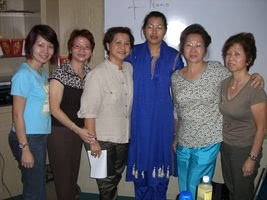
Yesterday, I attended a workshop on "Reduce Global Warming & Enzyme-Making" by Dr Joean. She's a homeopath and holistic health practitioner who is very passionate in 'Save the Earth' projects as she hopes to prevent natural disasters and also to protect our next generation. We were all touched by her unselfish love, passion and compassion. This project is massive but every effort counts, so let's do our part by starting to transform garbage to eco-friendly enzymes in our homes.
Some alarming facts that we learned:
1) By 2025, more than three-quarters of lands will be covered by water.
2) Just an increase of 1 metre of water can flood the whole S'pore
3) When we charge our handphone for the whole night, the energy used can light up 100,000 houses
4) Now in Netherlands, only 40% of the country is land. Every year, the sea level is rising due to global warming.

Found the following useful info online.
Hope everyone can start to recycle and save the resources before it's depleted.

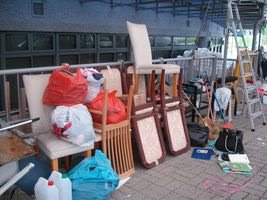


Materials that can be recycled are:

1. PET Bottles Mineral water bottles

2. Plastic and Bottles Bottles of soft drinks, soya sauce, milk, shampoo, detergents, Yakult and soft plastic bags.

3. Metal Cans & Tins Metal cans and tins from soft drink products, biscuit boxes, milk powder tins, paint cans, food & beverages tins...etc
4. Aluminium Cans Soft drink cans, beer cans...etc.

5. Paper Cartons Carton boxes, paper boxes, tissue boxes, egg trays, toilet paper rolls, fresh milk carton or paper-based fruit juice boxes.
(Kindly clean and flatten the above items to reduce storage space.)

6. Paper Newspapers, books, magazines, envelopes, photocopy papers, writing pads, advertisment papers, shopping bags...etc.
(Kindly keep them sorted and bundled properly.)

7. Clothes
Clothes should be packed separately, do not mix with other recycled items.

8. Electrical Appliances Computer sets, fans, video players, DVD players, TV sets, radios...etc.

9. Metallic Items Metal and stainless steel items such as pots and pan, aluminium containers, iron rods...etc

10. Others
School bags, leather, belts, shoes, soft toys, dry batteries, CD discs...etc.

Items that we DO NOT recycle:

All types of glasses, mirrors, fish tanks, flower pots, tableware, furnitures, rugs, ornaments, paintings, clocks, quilts, uniforms, undergarments, slippers, socks, wigs, flags, files, refrigerators, tyres, old records, computer floppy disks, sponge, etc.

Do you know?
- Recycling 50kg of paper = Saving one 20-year-old tree
- Recycling 10kg of metal can = Saving 5.7 litres of crude oil
- Recycling 1 aluminium can = Saving electricity for 3 hours of TV time
- It takes 1 litre (0.2 gallon) of petroleum energy to produce 32 PET bottles.

PET plastic bottles can be recycled to make sleeping bags, winter coats, stuffing for stuffed toys, zippers, binding bands, industrial plastics, heat sealable films, and many other things.
Recycling plastic is better than producing new plastic because the process requires 50 percent less energy.
Lifespan of garbage
If we do not recycle these resources, the time taken for them to be disintegrated naturally are:
- Newspaper-- 1 to 3 years
- Cotton-- 1 to 5 years
- Leather-- 50 years
- Wood & bamboo-- 200 years
- Disposable diapers-- 500 years
- Aluminium cans-- 500 years
- Glass bottles-- 1000 years
- Polyfoam-- Forever
- Plastic-- Forever